Translate

Showing posts with label FDA. Show all posts

Tuesday, March 7, 2017

Caged or free range which is better?

 Caged or free range which is the safer food source? 

     Animal rights activists and the food industry, would have you believe that the free range animal is happier and therefore healthier, but is that true?

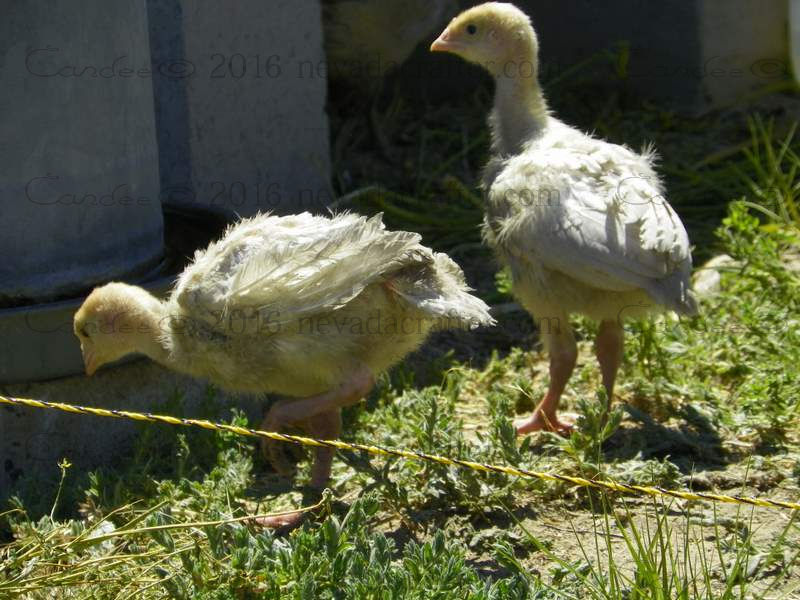
    Free range poultry feed on various vegetation and are extremely fond of insects and small rodents. Turkeys, in particular have no qualms about eating small mice and anything else that is crawling on the ground. 
    As a result like most livestock (this includes goats, sheep, cattle, etc.) that is free range, poultry is exposed to various parasites because they are feeding on things that are on the ground. Poultry can have many different parasites living within them including tapeworms, eye worms, roundworms, cecal worms ect. Fortunately for the poultry (chickens, etc.) for the most part do not have a problem with these parasites unless the parasite infestation becomes excessive, which is rare. 
    In addition range free animals are exposed to wild animals which can carry more than just parasites, but also various diseases. 
    
Grasshopper represents one of thousands of different poultry food sources.
    Caged or cage free poultry is raised within a confined environment where their food and living environment are kept as sterile and disease free as possible. Their food is controlled and measured and in some cases treated with antibiotics and steroids. These factory farms have a great deal invested in these animals and as a result go to great lengths to keep their livestock healthy. The idea that these large farms are not interested in healthy animals is ludicrous. Unhealthy animals do not produce and jeopardize the entire operation. 
   Now don't get me wrong, I'm all in favor of range free, grass fed animals. I do not believe people should be eating any animal that has been treated with steroids, antibiotics or God knows what. I believe that if an animal food product is handled and processed properly, using food safety standards, it can be just as safe if not safer than any other food product. 

    So we come to the question at hand, which is better caged or range free?

  1. Is range free just another marketing ploy to get you pay more for a product that is not any safer to consume than a caged animal?
  2. If you raise a chicken inside a sterile bubble and feed it only sterile food will it produce a safer food product or will it produce a meat product that is devoid of anything nutritional?
  3. If the label says range free, grass fed, non-GMO, etc. how do you know you're getting what you're paying for?
  4. A recent survey of fish markets found as much as 85% of all fish in your local market is mislabeled and not what it says it is. So how do you know you're getting ground turkey as opposed to ground chicken or is it a mix of something else?
  5. In the old days poultry producers were required to leave the head on any butchered animal. This was to prevent farmers from selling a duck as a chicken etc. It was also done so that you could tell how fresh the meat was. Do we need to return to such methods?

    And as always keep asking questions


Tuesday, May 31, 2016

Pizza Hut no longer adding antibiotics?

Pizza Hut is no longer going to add antibiotics and other chemicals to their pizza?


So Pizza Hut today was one of the first to announce and admit that they were going to stop using antibiotics and other chemicals in their pizzas in an effort to improve sales. So the real question comes down to this, if they didn't tell us before that they were using antibiotics and other things in their food product, and we didn't know it, how are we going to know if they've stopped using those products? If a food product never spoils, never diss-colors, never loses its flavor is it a safe product to consume ? When the almighty dollar takes precedent over food safety do these companies really know what the word ethics means?

Tuesday, May 17, 2016

Lahontan Reservoir, safe or unsafe?

Lahontan Reservoir 

safe or unsafe?


When reading this article, please keep in mind these are questions? They are questions that any concerned parent or person would have if they were living under similar conditions. And as far as I know there is not a law against asking questions. The article is not intended to imply anything about the Churchill County, Fallon, Nevada area. Although their should probably be a better explanation given to the public about heavy metal contamination, other than scientific reports that only someone with a degree can read or understand.

  Today I thought I would ask a few questions about a local matter. For many years now we have known that due to mercury contamination of the Carson River in Nevada, that the fish in 
Lahontan Reservoir are not safe to eat, correct? In my research concerning the contamination of mercury, I found the government information to be mainly concerned about the consumption of the fish from the reservoir. I did learn that the contamination is throughout the water system and that the Indian Lakes area has the higher concentrations of mercury. I found little if any information as to how this contamination affects agricultural crops, livestock, wildlife or people. I also found little information regarding other heavy metals and contaminants that would've resulted from the same mining operation that caused the mercury contamination.
     Many are using this irrigation water from the reservoir to water their crops and in some cases water their livestock, is that safe? If the fish are contaminated how is it that the cows drinking this water are not contaminated or the milk they produce? If hay fields are irrigated with water from the reservoir how is it that these agricultural fields are not contaminated as well?  Lahontan Reservoir is also used as a recreational area in which people use the reservoir for swimming boating and fishing.(With the understanding that the majority of the fish, are catch and release and not consumed.) EPA does not consider mercury to be a carcinogen but it is a well-known toxin that causes nerve damage and with enough exposure mercury can kill you. As for the wildlife, some of the game birds and other animals that feed on the fish are showing high levels of mercury, but for some reason there there dosn't seem to be a limit on the number of birds you eat like there is a limit on the fish, why is that?
    As a kid growing up in Fallon, Nevada I spent many a summer day swimming either in the canals or the lakes and reservoirs. To this day I still wonder how many of my health issues are the result of being exposed to this toxic substance. What is even more interesting is that fact that if you have your well water tested, Mercury, lead and other toxic heavy metals are not tested for unless you specifically request to have those test done, why is that? You would think that if you were living in an area that was prone to heavy metal contamination, that the government would want to know what the current levels are? Although, I have been told by some lawyers that the reason for this is deniability. In other words our local government may try and play dumb should a serious problem arise. They will simply say," I didn't know" and thus not be liable for anything.
    The Fallon area has been my home most of my life. It would be hard for me to think of living elsewhere, but don't you think we deserve the right to know what were dealing with? If we are being exposed to a toxic substance, do we not at the very least deserve the right to know what is killing us? And with all that said could we at least get someone to explain it to us in a simple non-scientific, non-legalese language so we don't have to hire an interpreter? After all how many of you actually trust our government to look out for our best interests? 


Monday, March 21, 2016

What are the safest products on the market today?

So think about it.
Who gets to use the safest products on the market?

What products go through the most testing?

If we are so worried about unsafe consumer products, then why are we not buying more baby products? No dies, no perfumes, and nothing that would be harmful to a sensitive infant. Why aren't all products made with the same safety restrictions?

Saturday, March 12, 2016

Are weevils evil?

Are weevils evil or a gift from God?

    Before you run screaming for your mommy and before you throw out your food consider the following. The United States is one of the few countries that considers eating insects a bad thing. If you travel to most Third World countries they are not only considered a good thing, but you may find them a main course in the meal. Finding weevils in your food is an indicator that your food has not been treated with chemicals and that your food is not likely a GMO, but the FDA has determined that adding insects or exceeding their limits is illegal, why? The FDA has determined that adding parasitic insects to grain in order to get rid of the weevils is illegal, but it's okay to treat that same food with pesticides that are known carcinogens, why? Weevils are not toxic and are higher in protein and have no fat content, why is that a bad thing? As a kid growing up in the 60s it was common to find insects in our cereal and other green products, what has changed since then? If we found weevils in the rice we simply poured the rice into a bowl of water and floated the weevils off or simply just went ahead, cooked the rice and ignored them being in the rice. Have you ever heard of anyone dying from eating a weevil? Science has determined that the production of protein for food consumption is more cost-effective and healthier if the protein comes from an insect. Have you ever heard of an animal rights activist being upset about the death of a weevil or an earthworm? Here is a food source that is highly efficient, has no hormones or antibiotics added, but because it's an insect nobody wants anything to do with it, why? But give somebody a box of crackers that has chemicals you cannot pronounce and people will eat the left and right. Is it possible that it is simply a matter of marketing?

So the next time you see a weevil or insect in your oatmeal consider this. If the weevil died from eating the oatmeal, should you be worried?

Monday, February 29, 2016

One pill or two pills?

One pill, two pill, three pills, or the bottle?

I had a headache and the aspirin bottle gave instructions of 1 to 2 pills for adults. I looked at a package of pills for my dog and it said based on weight give this dosage. Now both people above are adults but one is nearly 6'8" and the other is only 5'6". So is one person going to be under medicated and the other over medicated? This is a prescribed dosage set by the FDA, so can you trust what the FDA says? What else did they get wrong? If the dosage is so general, do we really need the pills in the first place? Are our pets getting better medication than we are? Is everything an illusion?

Friday, February 26, 2016

Are placebos the miracle drug we've been looking for?

If placebos work as well as they say, why do we need drugs?

The key to a placebo is how it is presented and how believable the presentation is (I. E. How good are the actors administering the placebo? In other words if the mind believes that it is being given a pill to kill pain then that is what happens. Placebos work 60% of the time or better, but even these results can be questioned. The doctors and scientists responsible for the testing of placebos are some of same doctors that test pharmaceutical drugs. So are test results going to lean towards a drug that doesn't make them any money or towards pharmaceutical drugs that makes them billions?
    I have met people that have never used an over-the-counter painkiller in their life and will tell you they've never needed it, why is that? These people are generally from third world economies where over-the-counter medications are not necessarily readily available. Is the food they eat, the reason they do not need painkillers or is it a cultural thing that is taught to them?
    Doctors give placebos on a regular basis to patients asking for illegal painkillers they don't need, and strangely enough you never hear of a patient suing a doctor for being given a sugar pill.
    Studies have also shown that placebos given in place of antidepressants can work just as well as pharmaceutical drugs, but what you won't hear is that the placebos had no ill side effects, why is that? At the same time if the placebo is presented to the patient with a list of possible side effects, strangely enough those side effects will appear. Does that mean that we should stop listing side bad effects. I'm sure that pharmaceuticals would love to be able to produce pills they do not have to be accountable for.
     It would seem that the mind is capable of manufacturing any drug or chemical that it thinks it needs. In fact if you take pain pills on a regular basis for headaches and then stopped taking the pills the mind will literally create a headache (rebound headaches ) in order to get its fix of painkiller.
   
 So if placebos work 60% of the time, could we cure 60% of the world with a placebo pill? Would drug dealers be more selling a placebo and get less complaints about their illegal drugs? If a person is given a placebo and told that it is an illegal drug would it show up in a drug test?

    Here is the best question of all, if a patient is given a placebo pill and told that it is poison would they die from it?

Thursday, January 7, 2016

Artificial sweeteners, safe or unsafe?

    In the 1970s saccharin was found to be unsafe for human consumption as research studies indicated that it caused cancer in lab rats. I remember that the initial response was the FDA banning the product product from store shelves, but that idea was rescinded with the argument that there was no alternative for diabetics to use at the time. So it was kept on the shelves but every product containing saccharin was required to have a warning label letting people know that it may cause cancer. In 2000 warning labels were removed because supposedly cancer was only found in laboratory mice or rats because their biology was slightly different.
Questions
If there is a difference between the biology of the rats and humans, shouldn't there be questions about all other products that were tested using this method? Why are food products tested by the manufacturer and not an independent laboratory? Mice and rats are used for testing food and drugs because their biology is similar to ours, but if this is not the case then how can we trust anything that the FDA has to say? If this same method is used to test other artificial sweeteners, are exemptions being made for these products as well? If a product is found to be carcinogenic but can still be sold so long as it has a warning label on it, does that mean mass murder is okay so long as you have a warning label? Euthanasia is considered to be illegal in this country, but it's okay to buy a product that will kill you?